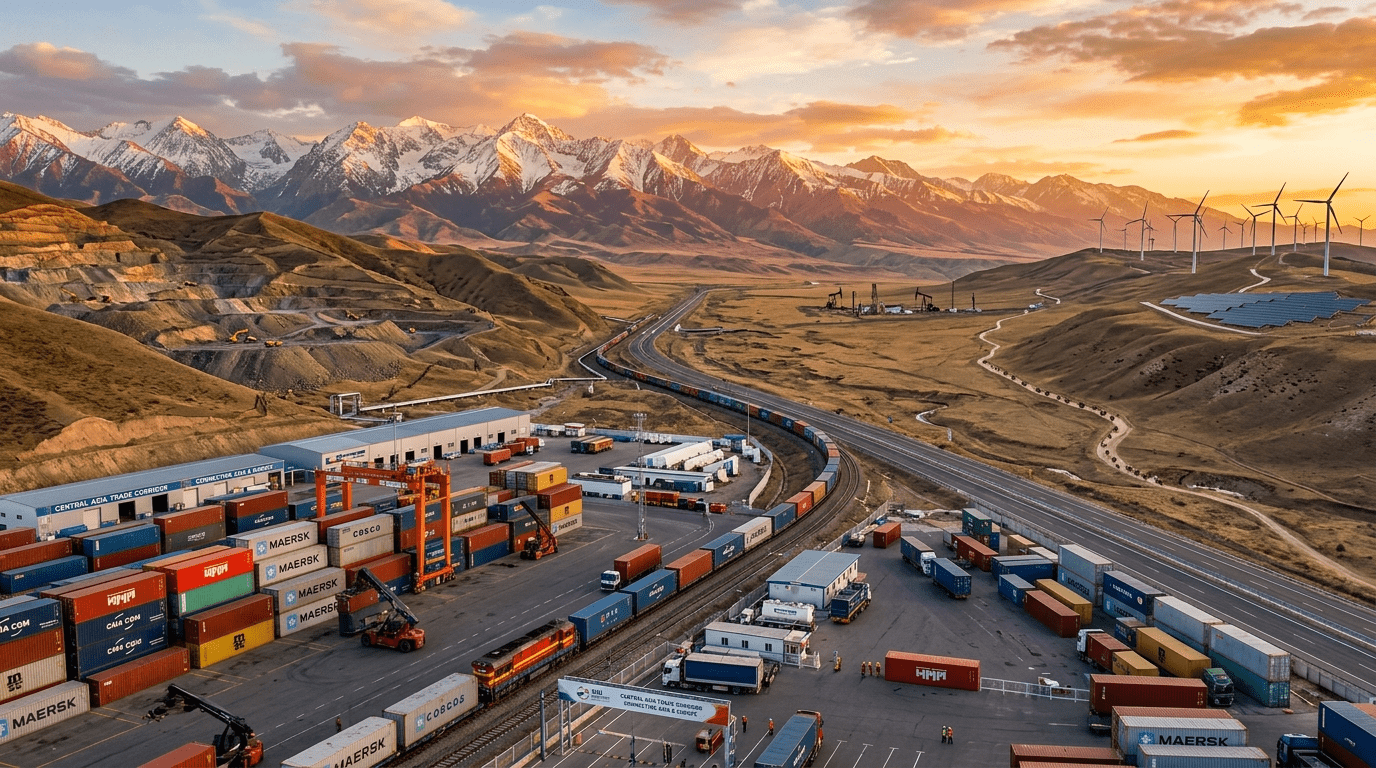
Shifting Global Tensions Spotlight Central Asian Trade Routes
Recent conflicts disrupting traditional shipping lanes have thrust Central Asia into the global spotlight. With maritime chokepoints facing ongoing threats and disruptions, an alternative corridor cutting through the heart of Central Asia has emerged as a critical link between Asian and European markets.
This shift has transformed the region from a geopolitical backwater into a magnet for international investment. Five Central Asian nations now find themselves courted by major world powers seeking access to their strategic position and abundant natural resources.
Economic Resilience Amid Global Turmoil
While conflicts threaten commodity supplies and fuel inflation concerns worldwide, much of Central Asia continues demonstrating remarkable economic strength. Growth rates hover around 5-6% across the region, even as other markets struggle. The area’s ability to attract investors through strategic asset sales has further boosted its economic standing.
The region sits atop vast reserves of critical resources including petroleum, natural gas, gold deposits, rare earth elements, and uranium. This wealth has sparked fierce competition among global powers from both hemispheres, all vying for influence and access rights.
Two Regional Powerhouses Lead the Way
Two countries anchor this regional transformation. Kazakhstan, blessed with enormous energy resources, stands alongside Uzbekistan, ranked among the world’s top ten gold producers. Together, they form the backbone of what’s known as the “Middle Corridor” connecting China through the Caspian region to Europe.
Cargo volumes through this corridor have skyrocketed dramatically in recent years. Following geopolitical upheavals, freight traffic surged to approximately five million tons, representing a tenfold increase within just three years. Investment analysts describe this as one of the most compelling opportunities in emerging and frontier markets today.
Great Power Competition Intensifies
Major world leaders have increasingly turned their attention to this once-overlooked region. High-level diplomatic visits have multiplied, with leaders from China, Russia, America, and European Union all engaging directly with Central Asian governments.
Recent developments have accelerated this trend. Senior officials from Uzbekistan traveled to Washington for discussions covering critical minerals, advanced technology partnerships, and infrastructure development. American leadership has extended invitations to Central Asian heads of state for major international gatherings, signaling growing strategic interest.
China currently maintains an economic lead in the region. Development bank data shows Chinese foreign direct investment over the past decade exceeded 36 billion dollars, surpassing other major powers. However, the five Central Asian nations deliberately pursue balanced relationships with multiple powers, meaning the competitive landscape remains fluid and unpredictable.
Capital Markets Surge with Activity
International capital flows have accelerated alongside great power competition. Kazakhstan, producing over 1.7 million barrels of crude oil daily and leading global uranium production, now holds investment-grade credit ratings from all three major rating agencies.
State-owned enterprises have successfully tapped bond markets, with the national railway issuing one billion dollars in debt and a major fintech company raising 600 million dollars at historically low rates. New investors include both Chinese tech giants and American institutional funds.
Uzbekistan has similarly accessed capital markets at record-low borrowing costs. The country’s sovereign wealth fund completed a groundbreaking initial public offering on the London Stock Exchange, attracting prominent global asset managers. Rising gold prices have helped offset energy import costs for the resource-rich nation.
Energy Sector Makes Comeback
Major energy companies are returning to the region with renewed interest. British petroleum giant BP is pursuing exploration contracts in Kazakhstan’s oil and gas fields while considering expansion into Uzbekistan. Turkmenistan, holding the world’s fourth-largest natural gas reserves and producing over 76 billion cubic meters annually, exports most of its output to China.
Challenges Remain Despite Growth
The region faces significant headwinds. Kazakhstan maintains benchmark interest rates at historic highs of 18%, while Uzbekistan’s rates reach 14%. Economic analysts warn that if global inflation accelerates again, countries heavily dependent on fuel imports could face severe economic pressure despite the region’s overall resource wealth.