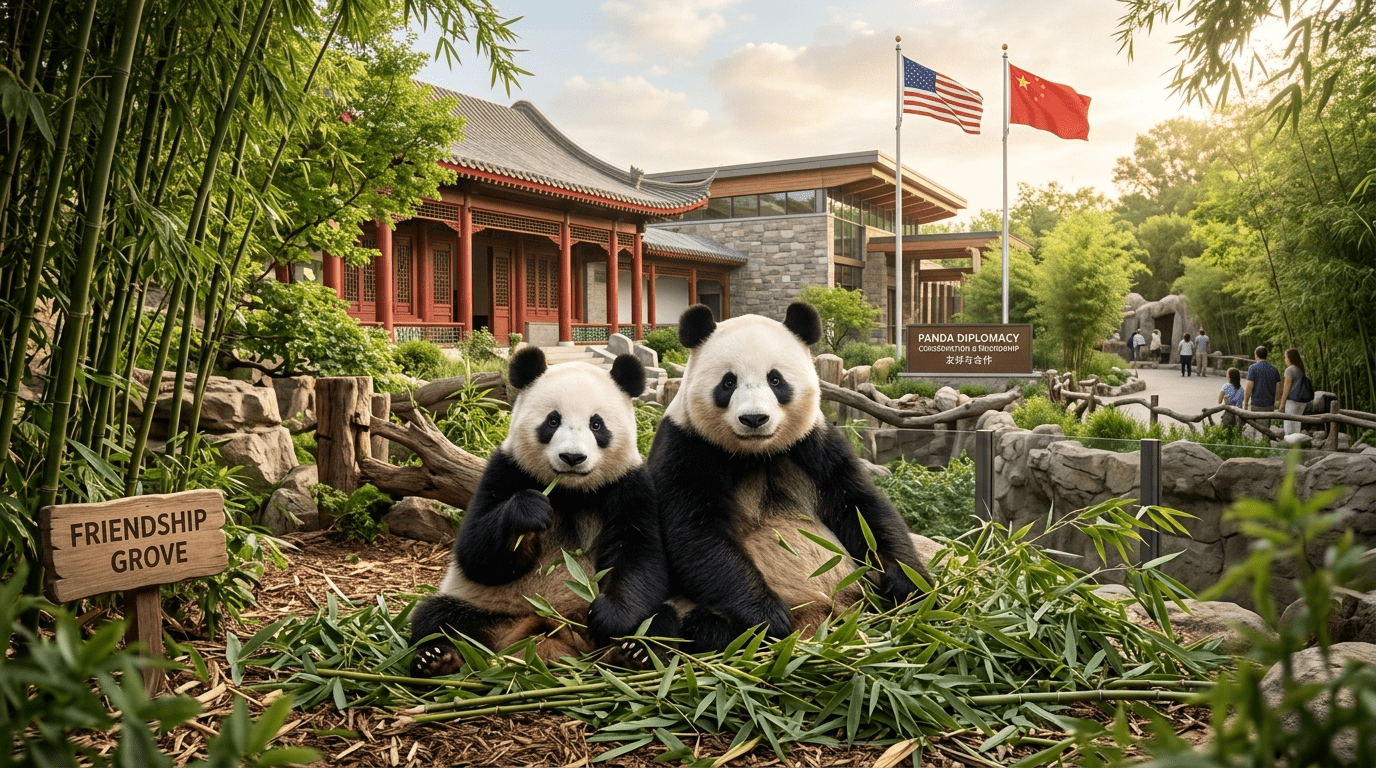
Beijing Signals Warming Ties Through Panda Diplomacy
As President Donald Trump prepares for his upcoming visit to Beijing, China has revived its iconic panda diplomacy program, suggesting a desire to ease tensions between the two nations.
The China Wildlife Conservation Association announced through its official WeChat account that it will launch fresh collaborative research on giant panda protection with the Atlanta Zoo in Georgia. Two pandas from the Chengdu Giant Panda Base—Pingping (male) and Fushuang (female)—will travel to America for a decade-long joint research program.
A Strategic Diplomatic Gesture
Observers view this decision as an indirect message of Beijing’s willingness to reduce strain in US-China relations. The timing—just before the two leaders meet—makes the symbolic value even clearer, given China’s long history of using pandas as diplomatic tools.
Both nations are actively preparing for the pandas’ arrival. American officials have been upgrading zoo facilities to ensure the animals will have comfortable living conditions. Meanwhile, Chinese experts are providing technical guidance on habitat management, nutrition standards, and healthcare protocols.
A History of Panda Partnership
This isn’t the first time Atlanta has hosted Chinese pandas. The partnership began back in 1999 when giant pandas Yangyang and Lунлun arrived at the Atlanta Zoo. That pair successfully bred seven cubs, making it one of the most celebrated success stories in panda conservation cooperation between China and Western nations.
Over the years, both countries have worked together on behavioral training, preventive veterinary medicine, and conservation education programs. Currently, the United States houses four giant pandas total—two at the San Diego Zoo and two at the Smithsonian’s National Zoo.
How Panda Diplomacy Works
China loans these endangered animals—found naturally only within Chinese borders—to countries it considers friendly partners. Under typical agreements, any giant pandas born overseas must return to China when they reach approximately four years of age.
Following this protocol, Fubao, a beloved panda who lived in South Korea, was returned to China in early 2024 after reaching the designated age.