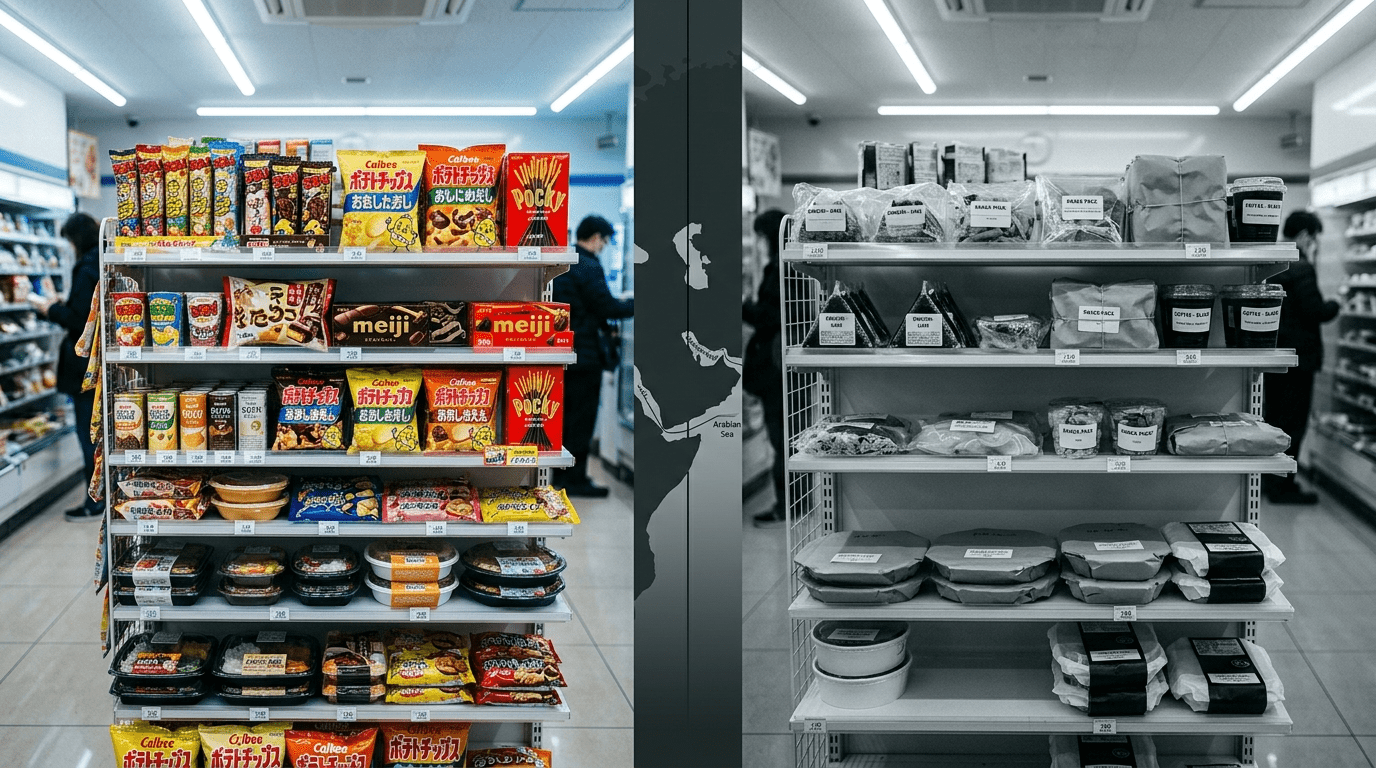
Supply Chain Chaos Hits Japan as Middle East Tensions Disrupt Naphtha Imports
A prolonged crisis in the Middle East has triggered severe shortages of naphtha in Japan, causing widespread disruption across retail and food industries. Despite government reassurances about adequate petroleum reserves, businesses on the ground are scrambling to find alternative packaging materials as supply chain anxiety grows.
Recent reports reveal that unstable supplies of naphtha—a petroleum-derived raw material—have forced companies throughout Japan to switch to substitute packaging. Convenience store chain Lawson has begun replacing plastic coffee cup lids with paper versions, not for environmental reasons, but due to stock shortages. Major supermarket retailer Ito-Yokado has swapped transparent plastic containers used for sashimi and other fresh foods with simple plastic wrap.
Iconic Snack Brand Switches to Black-and-White Packaging
Calbee, one of Japan’s most recognized potato chip manufacturers, is now facing an ink shortage. Because printing ink relies on naphtha as a base ingredient, the company has decided to release its popular potato chip products in black-and-white packaging starting at the end of this month, abandoning its signature colorful designs.
Japan depends on the Middle East for approximately 95% of its crude oil, and more than 80% of its naphtha has historically come from the same region. However, the effective blockade of the Strait of Hormuz has pushed Japanese companies to seek alternative sources, including suppliers in the United States.
Prices Double as Companies Seek Alternatives
The real challenge is cost. Procurement prices for non-Middle Eastern naphtha have surged to roughly double pre-crisis levels. Industry analysts warn that even when alternative imports are available, the steep cost burden is unavoidable and will likely be passed on to consumers through higher prices for everyday goods.
Production cutbacks have also begun in earnest. Since March, more than half of Japan’s ethylene production facilities—which use naphtha as a feedstock—have entered reduced-output mode. Even before these cuts, domestic ethylene plant utilization rates hovered around only 75%, which was already considered low.
Government Downplays Concerns Despite Industry Warnings
While businesses sound the alarm, the Japanese government continues to downplay supply concerns. The Prime Minister recently stated that petrochemical raw material supplies should remain stable until early next year. However, industry observers point out a mismatch between official statements and ground realities.
The government claims there are roughly 1.8 months of inventory for chemical resins and other intermediate materials. Yet these categories include thousands of different product types, meaning inventory levels vary dramatically by item. Experts caution that any surge in orders upstream can instantly trigger shortages downstream, creating a fragile and unpredictable situation across the supply chain.