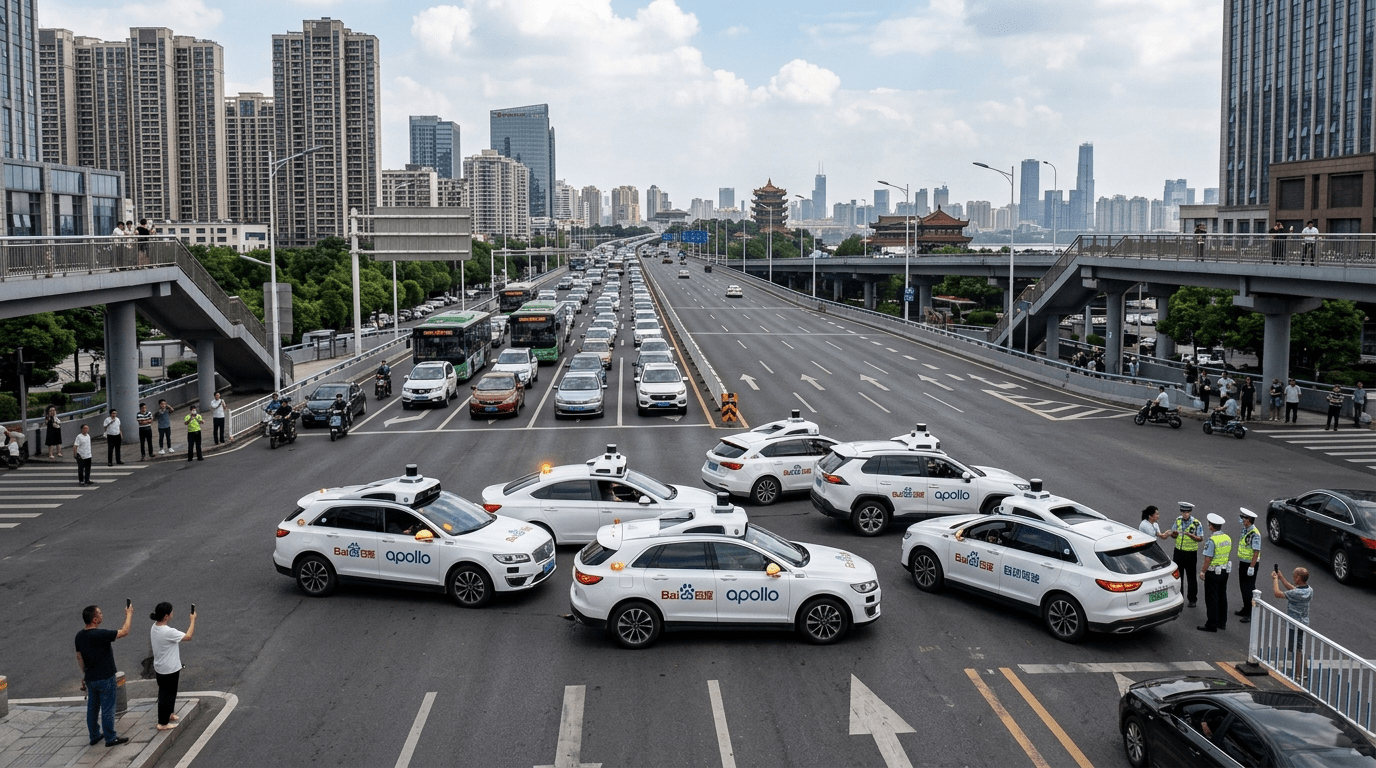
Chinese authorities have reportedly suspended the issuance of new permits for autonomous vehicle operations following a significant incident last month involving multiple robotaxis operated by Baidu in Wuhan that simultaneously malfunctioned and stopped operating.
According to sources cited in media reports, officials from three government agencies held meetings earlier this month with representatives from cities currently running robotaxi and self-driving pilot programs. During these sessions, local governments were instructed to conduct comprehensive internal safety reviews and strengthen monitoring protocols.
The temporary halt on new permits means that autonomous driving companies now face limitations in:
- Deploying additional robotaxi units to existing fleets
- Launching new trial projects
- Expanding operations into different cities
The duration of this suspension remains uncertain at this time.
The incident that triggered these measures occurred when numerous Baidu-operated autonomous taxis experienced simultaneous system failures throughout Wuhan, leaving vehicles stranded in the middle of roads, including elevated highways and busy urban intersections. Some passengers were trapped inside the vehicles during the malfunction. Local police indicated that technical system errors were likely responsible, though the company has not issued an official statement explaining the cause.
Industry analysts suggest this regulatory pause could significantly impact the rapidly expanding autonomous driving sector. Financial projections estimate the self-driving market could reach approximately 83 billion yuan in value by 2030.
Chinese technology firms have been leading the global commercialization of autonomous vehicle technology and competing with international players in the space for market dominance.