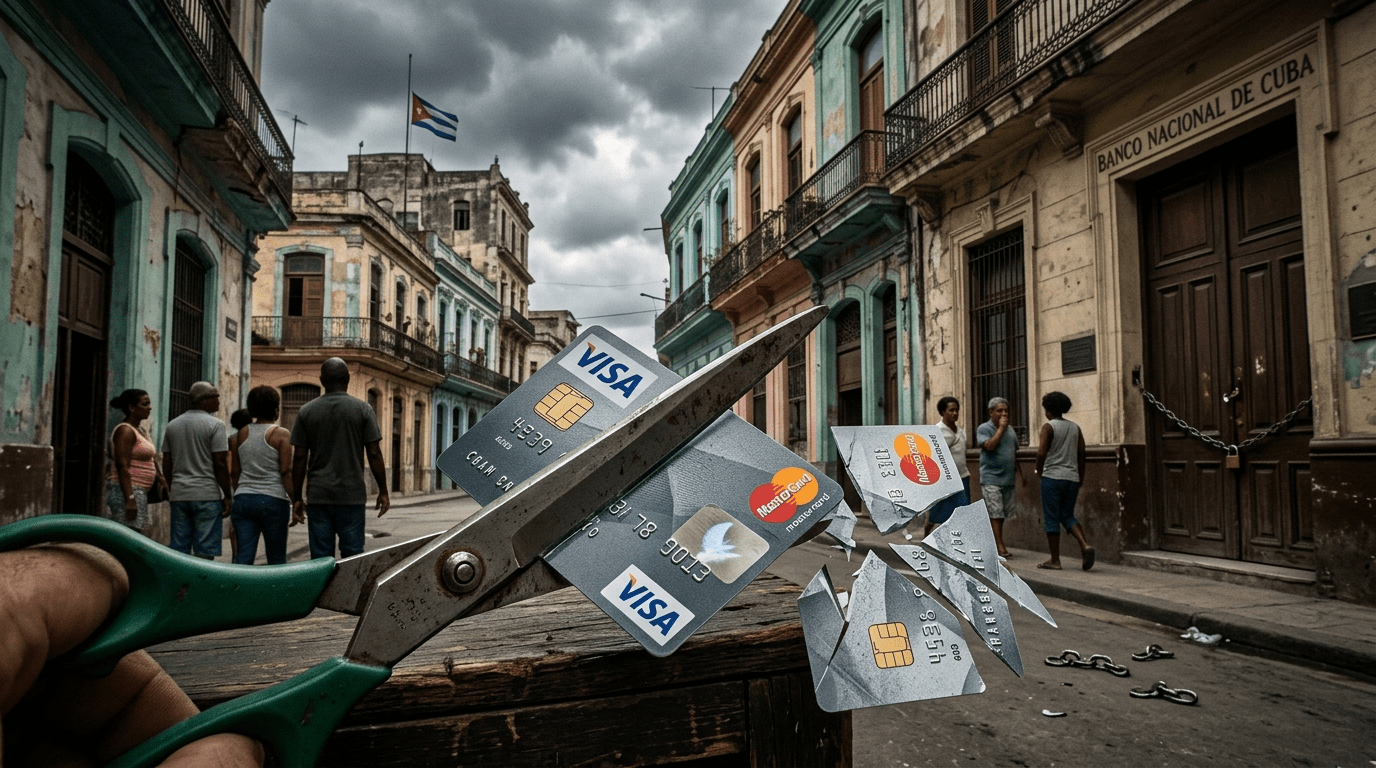
Cuba Faces Complete Visa and Mastercard Shutdown as international payment processors sever ties with the Caribbean nation effective June 6th, following sustained pressure from Washington.
The central bank of Cuba announced it received notification from foreign financial institutions handling Visa and Mastercard transactions that they would terminate their relationship with Fincimex, the processor managing all credit card operations within the country.
Fincimex operates as a financial subsidiary under GAESA, the military-commercial conglomerate controlling vast segments of the island’s economy. Washington has placed this entity on its sanctions list, accusing it of funneling profits from tourism, finance, logistics, and remittances to military leaders and political elites.
Cuban authorities reject these allegations, insisting GAESA contributes openly to national economic and social progress. However, the payment infrastructure collapse means the island can no longer collect revenue from internationally recognized card networks.
The Trump administration issued sweeping executive orders in early May targeting not only GAESA but also third-party companies conducting business with the conglomerate, aiming to cut off funding streams to the Cuban regime.
This escalating pressure has triggered a mass exodus of multinational corporations from Cuban operations:
- Major shipping lines including France’s CMA CGM and Germany’s Hapag-Lloyd halted cargo bookings to the island
- Canadian mining firm Sherritt, which extracted nickel and other minerals, withdrew last month
- International hotel chains—Meliá, Iberostar, and Blue Diamond—suspended their Cuban ventures
Spanish hospitality giant Meliá specifically cited deteriorating geopolitical, legal, and economic conditions when announcing the immediate cessation of management, marketing, and branding services for its 15 properties across Cuba.
The withdrawal wave shows no signs of slowing. GAESA controls an estimated 60-70% of the Cuban economy and oversees the majority of foreign joint ventures, making it nearly impossible for international businesses to operate without engaging the sanctioned entity.
Analysts predict the intensified sanctions strategy—designed to destabilize the communist government—will deliver devastating blows to Cuba’s already struggling economy and its battered tourism sector, which had been a critical source of foreign currency.