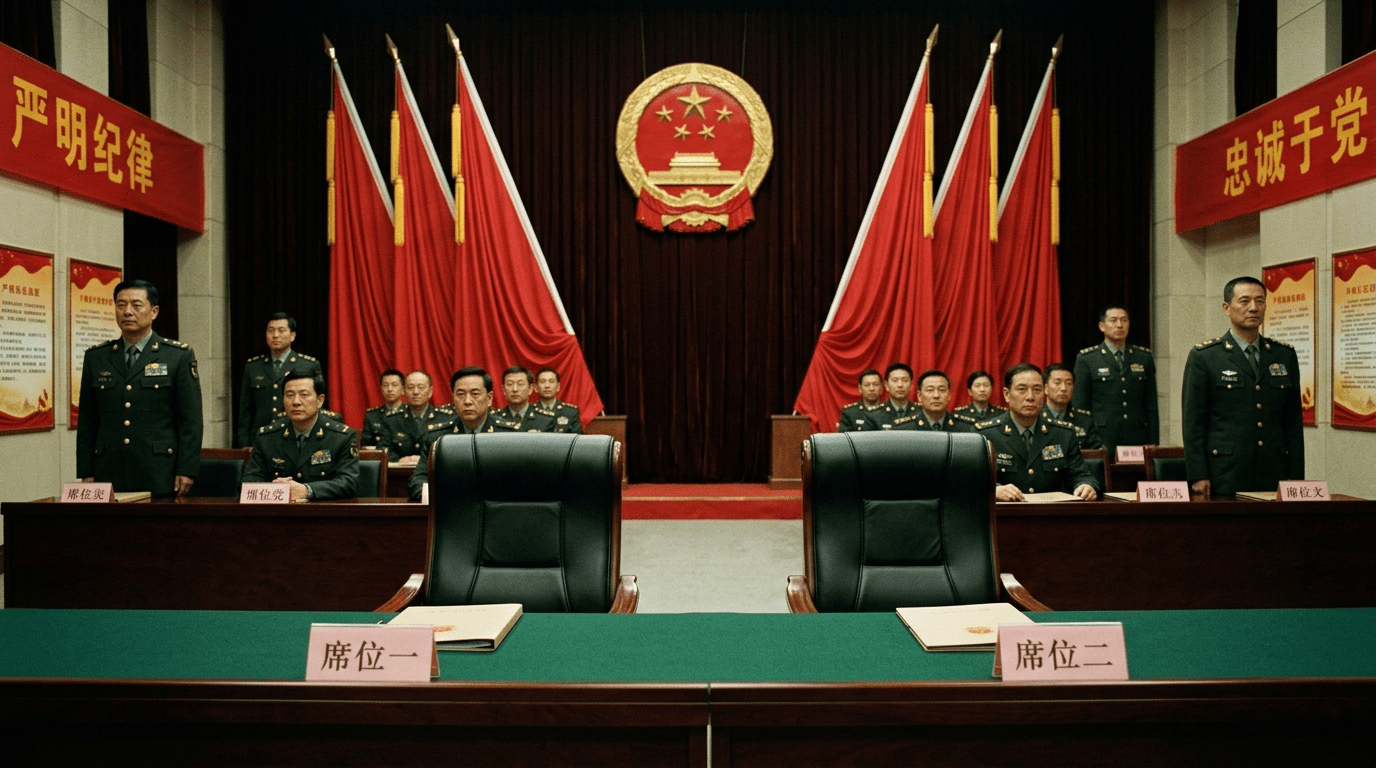
China’s leadership has handed down suspended death sentences to two former defense ministers, marking an escalation in President Xi Jinping’s sweeping purge of military leadership. The consecutive downfall of top military figures is raising questions about command stability within the People’s Liberation Army and the readiness of potential Taiwan invasion plans.
According to reports from the Financial Times on the 8th, Chinese military courts sentenced both Wei Fenghe and his successor Li Shangfu to two-year suspended death penalties on bribery charges. The sentences are expected to be commuted to life imprisonment after two years, accompanied by lifetime deprivation of political rights and confiscation of all personal assets.
State media outlet Xinhua confirmed that both officials received lifetime bans from political activity. Wei served as defense minister for five years until 2023, while Li lasted merely seven months in the position. Both have been identified as primary targets in Xi’s anti-corruption campaign within the military.
While Chinese authorities justify the purge as rooting out corruption, the extensive scope and high-ranking status of those targeted suggest a broader political loyalty restructuring effort.
The purge recently reached its peak with the January dismissal of Zhang Youxia, vice chairman of the Central Military Commission, and Liu Zhenli, PLA Chief of Staff. Unlike other military officials, these two faced additional charges of “insubordination.” The PLA’s official newspaper criticized them for “severely undermining the chairman responsibility system.”
Zhang Youxia was considered a core ally in Xi’s military modernization efforts. His fall—despite being older than Xi and wielding substantial military influence—indicates the power realignment runs deeper than anticipated.
The Center for Strategic and International Studies analyzed that approximately 62 senior generals were removed in the past year alone, with a total of 101 military-related personnel purged or disappeared since 2023.
Diplomatic observers are focusing on the possibility that this purge extends beyond anti-corruption measures to create real operational burdens on China’s military capabilities. Repeated replacements of top military leadership could disrupt command continuity.
Particularly concerning is that as China intensifies military pressure on Taiwan, vacancies in key command positions could impact operational execution capabilities and wartime readiness.
The harsh sentence against Li Shangfu carries a strong warning message for the military establishment. Analysts cited by the Financial Times note that Li came from a revolutionary elder family with deep military connections, making this verdict a signal that even privileged establishment figures face no exceptions.
Li’s father, Li Shaozhou, served as a commander in the Northwest Field Army during China’s civil war and belonged to the same faction as Xi Jinping’s father and Zhang Youxia’s father.
However, critics point out that prolonged purges could intensify internal military anxiety and loyalty competition. Continuous investigations and dismissals may cause military officials to become hesitant in decision-making. Some argue the anti-corruption investigations focus more on strengthening political control than actual military capability enhancement.
The key question moving forward is how far Xi’s regime will extend additional purges. As the Chinese leadership prioritizes military control, internal personnel changes and loyalty verification are expected to continue for the foreseeable future.
Simultaneously, scrutiny over the PLA’s actual combat readiness and Taiwan-related military planning is likely to intensify.