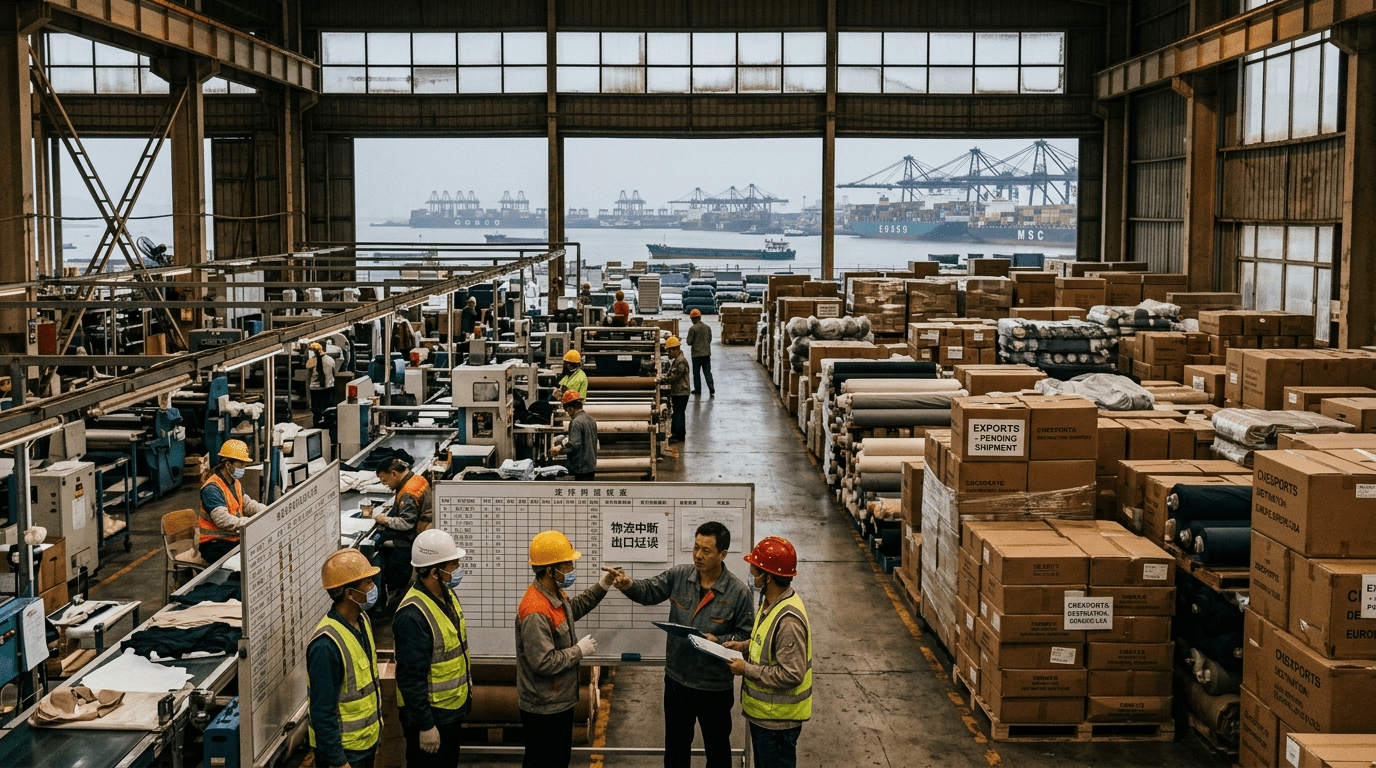
Chinese factories are facing a double blow of rising production costs and vanishing export orders as the fallout from Middle Eastern conflict disrupts critical shipping routes through the Hormuz waterway.
Manufacturing workers across China’s industrial heartlands are expressing deep anxiety about job security, while exporters struggle with production delays and shipping bottlenecks.
In Foshan’s manufacturing zones within Guangdong Province—one of China’s premier industrial hubs—laborers earning hourly wages between 18 and 20 yuan are describing mounting financial pressure.
One worker, requesting anonymity, expressed frustration: “Nobody understands what our lives are really like. All we do is work—there’s no life left. Please, someone help us.”
Despite maintaining approximately 5% GDP growth last year amid American tariff pressures, China’s economy now confronts fresh challenges from the Middle Eastern war.
The potential closure of the Hormuz Strait—a vital global shipping channel—has triggered sharp increases in both raw material prices and freight costs.
Merchants operating in Guangzhou—home to the planet’s largest fabric marketplace—report significant damage to their businesses.
Petrochemical products used in textile manufacturing have jumped in price, pushing production expenses up by roughly 20 percent.
One merchant explained: “Our costs have climbed, but buyers refuse to pay higher prices. Warehouses are full of unsold fabric while new orders have completely dried up.”
China’s strategically important electric vehicle sector is also experiencing severe disruption.
An EV exporter revealed that while 90% of last year’s shipments went to Middle Eastern markets, this year’s business has virtually stopped due to the conflict.
“Vehicles that should have been exported are now stuck at Chinese ports with nowhere to go,” the exporter said.
While high-tech exhibitions project an image of progress and innovation, the reality on factory floors tells a different story—one of growing unease among small and medium enterprises and their employees.
Analysts suggest that China’s leadership is urgently pushing for a ceasefire partly because of these economic pressures.
The strategy appears focused on using diplomatic mediation to minimize supply chain disruptions.
A researcher from Chatham House noted: “Beijing wants Washington to remain predictable and is making every effort not to provoke the current American administration.”