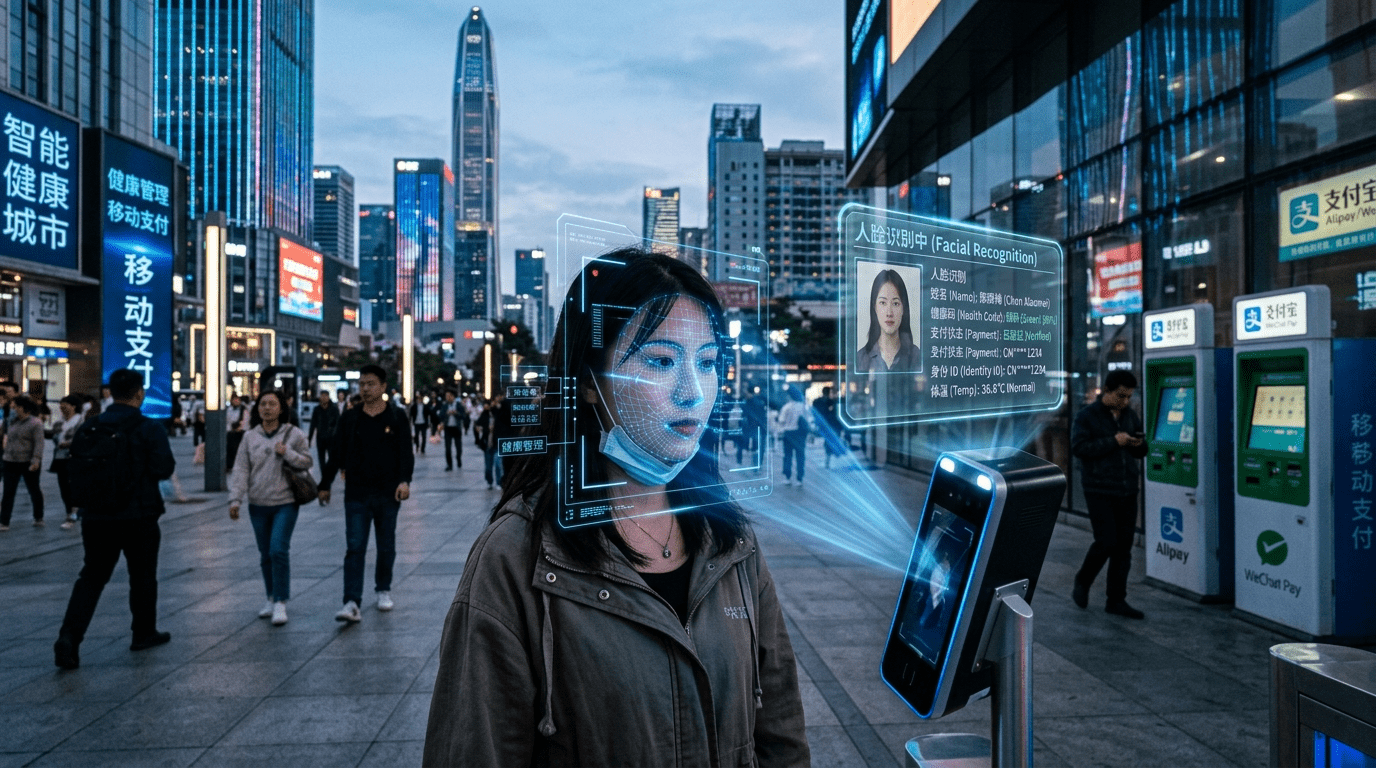
A decade after China rolled out facial recognition nationwide, the technology has evolved into a cornerstone of daily life. The system now processes data from 1.4 billion people, achieving 99% accuracy in identifying individuals—even distinguishing identical twins.
At a high-tech elderly care facility in Beijing, advanced cameras do more than just recognize faces. By detecting subtle blood flow changes on the skin’s surface, the system monitors over 50 health indicators—including anemia risk, blood oxygen levels, and sleep quality—with more than 80% accuracy. This data helps identify early signs of Alzheimer’s disease and tracks health changes over time.
From Security Tool to Everyday Payment Method
When the government first introduced the system in 2015—citing rural security needs—few anticipated how deeply it would integrate into society. Today, facial recognition has replaced QR codes for payments, building access, and even healthcare billing. The technology identifies people in roughly three seconds, handling obstacles like masks, glasses, and aging through deep learning algorithms.
Healthcare applications are expanding rapidly. The National Healthcare Security Administration now allows medical insurance payments through facial recognition. Patients simply look at a terminal to verify identity and settle bills—no insurance card or smartphone required. This proves especially helpful for elderly people unfamiliar with mobile payment apps.
• Guangdong Province: Over 5,000 medical facilities and pharmacies accept face payments, processing 33 million transactions worth approximately $1.4 billion
• Hangzhou: 365 designated hospitals and 610 pharmacies equipped with roughly 2,000 face payment devices
Transportation and Public Spaces
Chengdu’s subway system lets pre-registered passengers simply glance at turnstile cameras for automatic fare payment. Major museums, art galleries, universities, and tourist destinations like Zhangjiajie now permit entry through facial recognition alone—no tickets or passes needed.
The automotive industry uses the technology to detect driver fatigue through facial muscle tremors and adjust head-up display information based on gaze direction. Chemical plants monitor workers for drowsiness and stress levels they might not consciously notice.
Beyond Human Faces
Farmers apply facial recognition to livestock—identifying individual pigs and cattle to track health status, feed intake, and breeding cycles. Conservation programs use it to recognize endangered pandas individually, monitoring their movement patterns for protection efforts.
Privacy Concerns and New Regulations
Unlike passwords, facial data cannot be easily changed once compromised. The system’s ability to track personal patterns—from apartment entry to transit use to shopping habits—raises significant privacy questions.
Responding to these concerns, authorities issued guidelines last year requiring clear purpose and necessity for facial data processing. The regulations prohibit forcing people to use facial recognition and ban installation in sensitive private spaces like hotel rooms, public baths, changing rooms, and restrooms.
Western Adoption Begins
Even in Western countries previously skeptical of the technology, adoption is growing. British retail chains are installing “Facewatch” systems to identify shoplifters before they act. The system cross-references customers entering stores against criminal databases, alerting staff when matches occur.