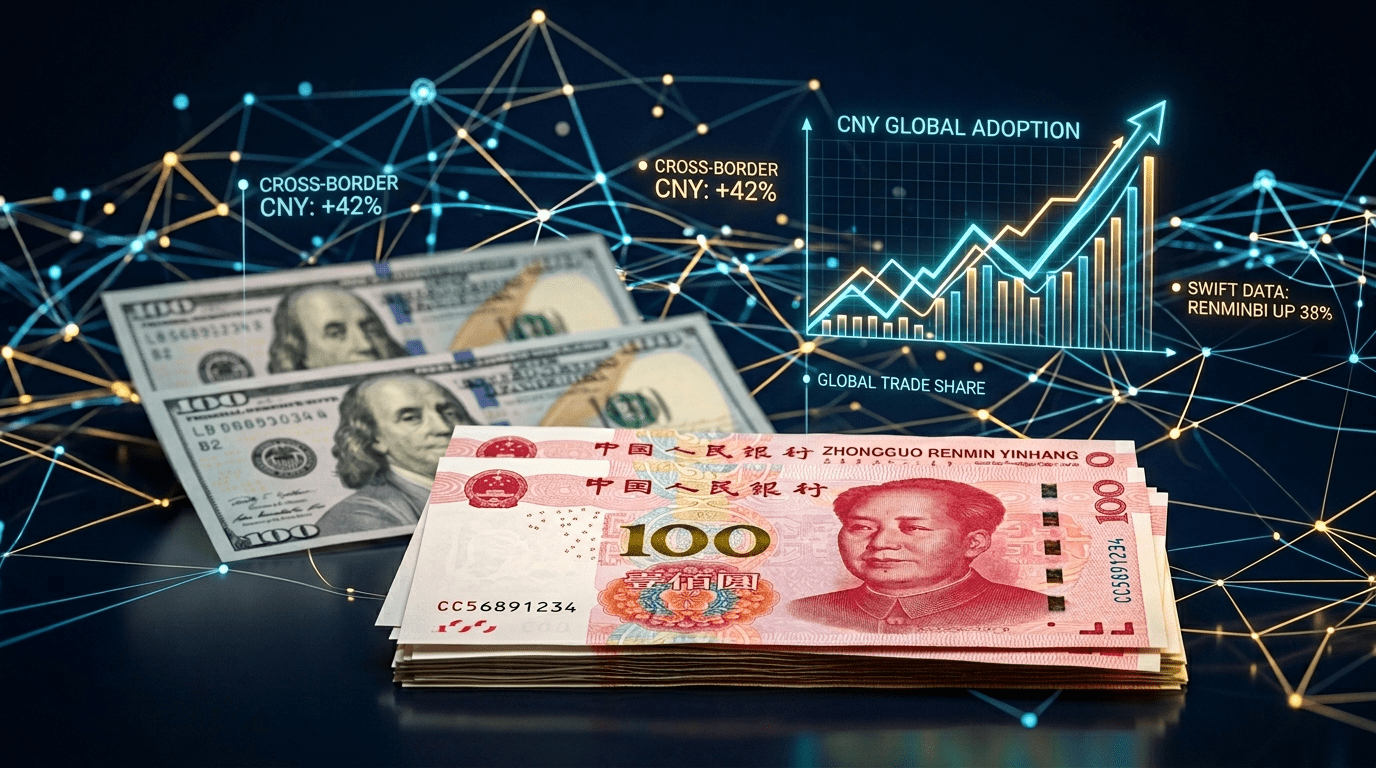
Washington’s Policies Unexpectedly Boost Chinese Currency
Analysts suggest that American actions have inadvertently accelerated the global adoption of China’s yuan. Recent military tensions in the Middle East have eroded confidence in traditional reserve currencies, prompting businesses and governments to seek alternatives. This outcome appears contradictory given Washington’s broader strategy of economic containment toward Beijing.
Surge in Cross-Border Payment Activity
China’s independent international payment infrastructure processed an average of approximately 920 billion yuan daily in March, a substantial increase from the previous year’s 680 billion yuan average. On one notable day in early April, transactions exceeded 1.2 trillion yuan—a record high.
Financial experts note that much of this growth coincided precisely with escalating Middle Eastern conflicts. A policy analyst from a Washington research institute observed that “the timing cannot be coincidental—the spike aligns exactly with regional instability.”
While system upgrades in February improved operational flexibility, the subsequent geopolitical crisis appears to be the primary catalyst. Tehran has long accepted yuan for energy exports, and despite reduced volumes, higher prices have increased total payments. Financial specialists report that transit fees collected for maritime passage are also predominantly settled in yuan rather than digital assets.
However, energy transactions alone don’t fully explain the surge. Capital flight from Gulf regions and broader international fund movements likely contributed significantly. March saw cross-border securities investment reach $712 billion, roughly 40% above typical monthly levels.
Sanctions History Creates Demand for Alternatives
The 2022 exclusion of Russian institutions from the global banking messaging system following Eastern European hostilities heightened concerns worldwide. Companies and nations recognized their vulnerability to similar actions, prompting contingency planning. A banking sector representative explained that “organizations had been preparing diversification strategies, and the recent crisis provided the impetus for implementation.”
Digital Currency Platforms Gain Momentum
Beyond traditional channels, digital payment platforms operated jointly by monetary authorities in China, Hong Kong, Thailand, UAE, and Saudi Arabia have processed substantial volumes. Through late last year, this network handled $55.5 billion in transactions, with over 95% settled in digital yuan.
Low borrowing costs add another attraction. Policy rates in China remain at 1.4%, creating a gap of more than two percentage points compared to American rates. This differential, combined with deflationary pressures keeping long-term yields subdued, has encouraged foreign entities to issue yuan-denominated bonds both on the mainland and in Hong Kong.
Southeast Asian governments issued 9 billion yuan in bonds in February, while a European nation became the first eurozone country to issue 2 billion yuan in securities this month. Recent data shows yuan’s share of global trade finance settlement exceeded 8%, ranking second behind the dominant currency at 80%.
Strategic Opportunity Meets Structural Reality
Beijing’s leadership has long emphasized the importance of currency strength. Years of infrastructure development and digital innovation have positioned the yuan as a viable alternative, with recent events serving as an accelerant.
Former central bank officials describe the current environment as a “golden window of opportunity,” citing tariffs, sanctions, and geopolitical tensions as contributing factors. Financial institutions similarly characterize this moment as historic, pointing to government commitment, infrastructure improvements, and favorable interest rates.
Yet the established order remains firmly entrenched. American payment systems processed over $2 trillion daily last year, and participation in the dominant global messaging network exceeds 11,500 institutions compared to fewer than 1,800 for China’s alternative.
Observers note that “even without achieving parity or replacement, simply providing a credible alternative can diminish the effectiveness of economic coercion”—a development that may reshape international financial dynamics regardless of market share figures.