Tehran Breaks Month-Long Pause with Strikes on Gulf Neighbors
On May 4th, concurrent with Washington’s launch of “Project Freedom,” Tehran resumed military operations after a month-long ceasefire, targeting both the United Arab Emirates and Oman. The timing and choice of targets suggest a calculated strategy to disrupt alternative oil export channels while sending a message about recent diplomatic developments.
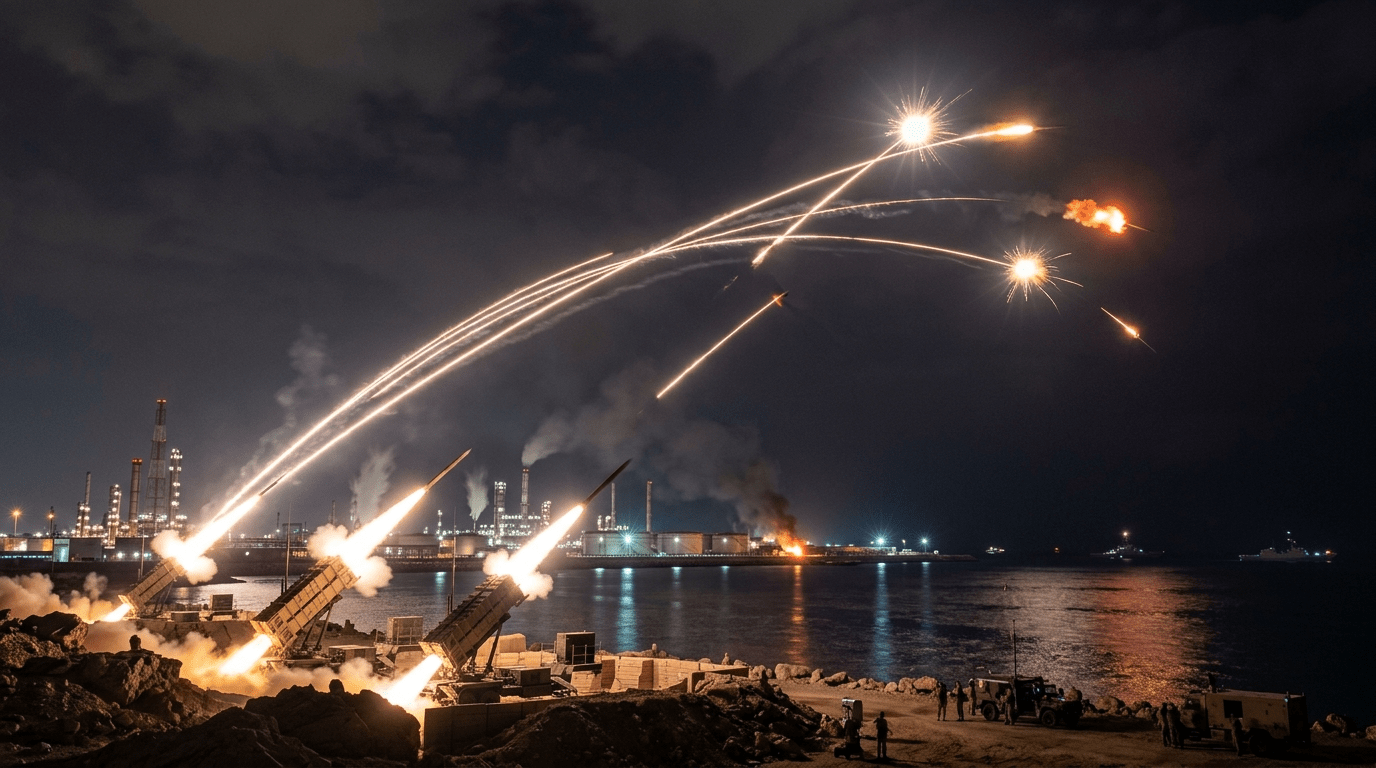
UAE Defense Systems Respond to Aerial Assault
Emirates defense forces successfully intercepted an incoming wave consisting of four unmanned aerial vehicles, three cruise missiles, and twelve ballistic missiles. Despite the interceptions, a drone managed to strike the Fujairah petroleum industrial complex, causing a fire that injured three people.
Strategic Significance of Fujairah Target
The Revolutionary Guard had recently announced an expanded control zone extending to Fujairah waters. This location houses a critical oil export terminal connected directly to Abu Dhabi’s oil fields—a bypass route avoiding the Strait of Hormuz entirely.
According to Hamidreza Azizi, a researcher at the German Institute for International and Security Affairs, the strikes represent a deliberate escalation targeting alternative export pathways. The objective appears threefold: threatening backup routes, maintaining elevated oil prices, and disrupting normalization efforts.
Energy Supply Implications
Should Tehran enforce comprehensive control over both primary and secondary routes, analysts estimate daily petroleum trade could decline by 1.5 to 1.8 million barrels. This would significantly worsen global energy supply challenges.
Oman Also Hit
A residential structure in northern Oman, near the UAE border, was struck in what authorities believe was an Iranian operation, injuring two people.
Escalating Rhetoric from Both Sides
The Institute for the Study of War notes that Tehran is demonstrating its control capabilities in response to Washington’s freedom of navigation efforts.
The American president issued a stark warning in a television interview, threatening complete elimination should Iranian forces attack U.S. vessels. Meanwhile, Tehran’s chief negotiator countered that Washington and its partners violated the ceasefire by implementing a blockade, placing navigation safety and energy transport at risk. He added that the current situation is unsustainable for the United States, while Iran “hasn’t even begun yet.”
The fragile ceasefire appears increasingly unlikely to hold as both nations exchange threats over control of one of the world’s most critical maritime chokepoints.