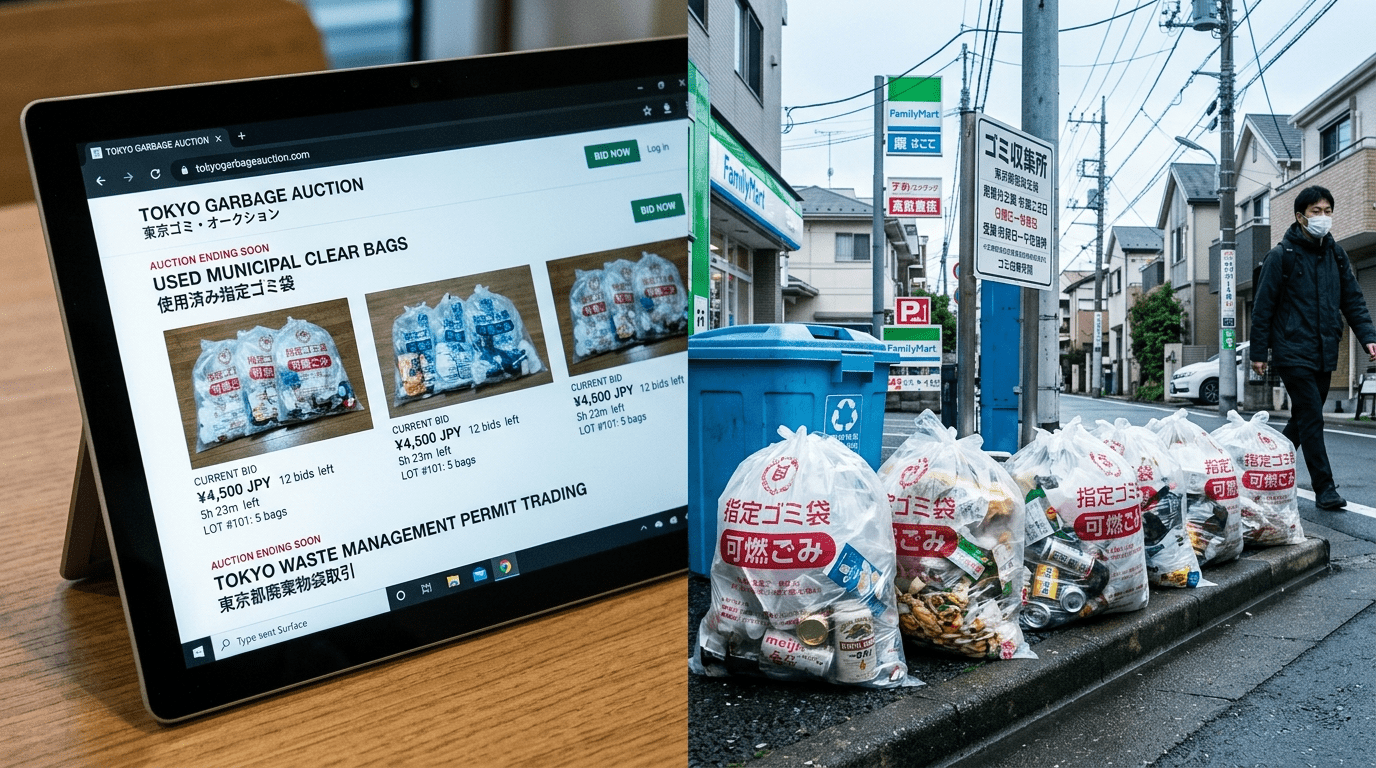
Several Japanese municipalities that mandate designated waste bags are now responding to severe shortages and panic-buying behavior that have left residents unable to dispose of their garbage properly.
Ichihara City in Chiba Prefecture temporarily suspended its requirement for official garbage bags on the 29th. Through the end of next month, residents may use any transparent plastic bag for combustible waste instead of the mandated polyethylene bags.
Local media outlets including NHK and Fuji News Network reported that the city received over 60 complaints from residents unable to purchase the designated bags by the 27th.
A municipal official explained that while suppliers claim they can provide the usual quantities, designated bags have appeared on auction websites, and anxious citizens have begun hoarding supplies, creating a vicious cycle of scarcity.
Ryugasaki City in Ibaraki Prefecture implemented a similar measure, allowing residents to substitute generic transparent bags through late June.
Meanwhile, Yonabaru Town in Okinawa Prefecture faces a different challenge: a shortage of thinner used in printing bag labels. Starting next month, the town will distribute unmarked bags that residents must sort by color alone.
Unlike some countries, Japan has not widely adopted mandatory designated waste bags. Tokyo’s 23 wards, for instance, require sorted disposal but impose no official bag requirement. This means the supply crisis has not yet attracted nationwide attention comparable to other nations, though communities with designated bag policies are experiencing similar difficulties.
The situation highlights how localized policy decisions can create unexpected infrastructure challenges when supply chains fail to anticipate sudden demand surges driven by consumer anxiety.