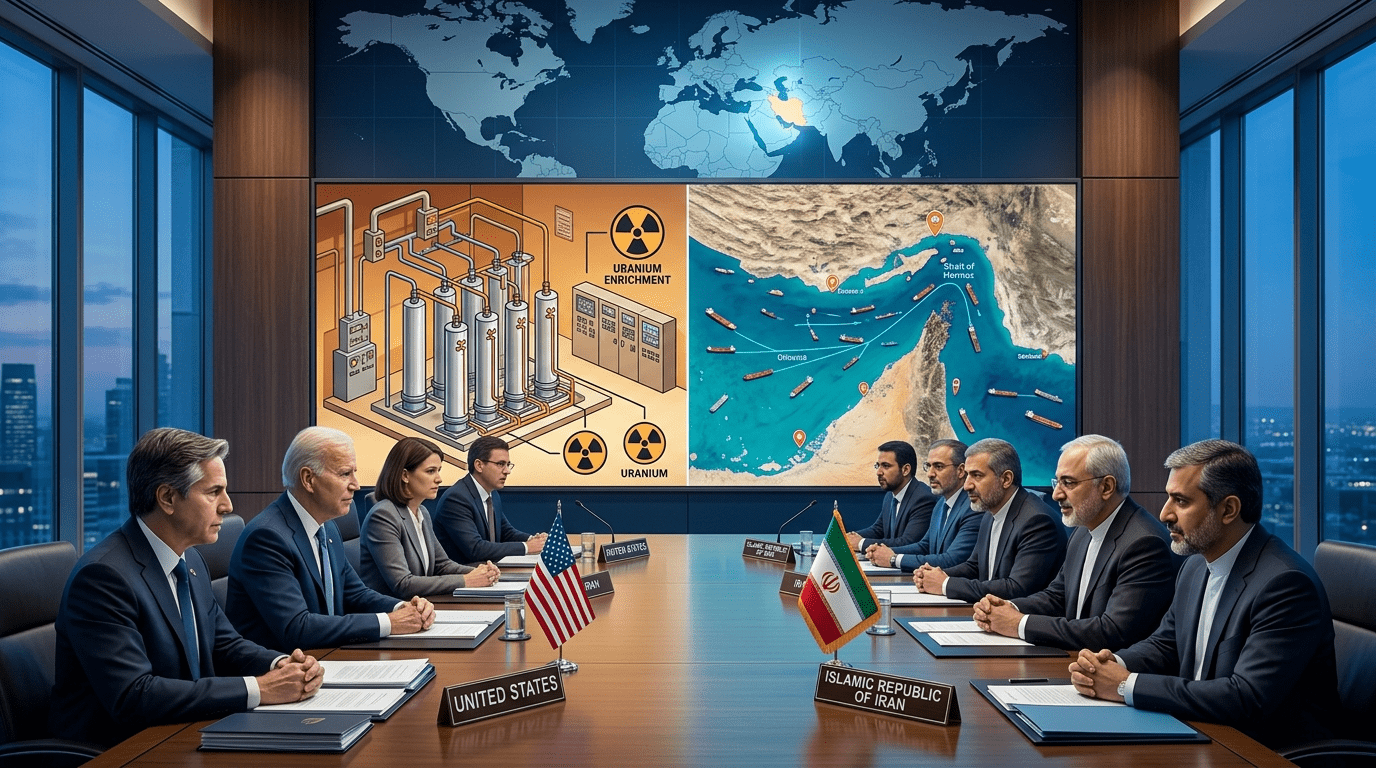
Washington Demands Decades-Long Nuclear Halt in Tehran Talks
Reports indicate that Washington has put forward stringent conditions as part of cease-fire discussions with Tehran, focusing on a multi-decade suspension of uranium enrichment and unrestricted passage through the Hormuz Strait.
According to diplomatic sources, the American side is insisting on a 20-year freeze on all enrichment activities, complete dismantling of key nuclear facilities at Fordow, Natanz, and Isfahan, elimination of underground nuclear operations, surrender of all enriched materials, commitments against weapons development, full inspection access with penalty mechanisms, and reopening of the strategic waterway.
The timeline for halting enrichment remains the central point of contention. While intermediary proposals suggesting 12 to 15 years have surfaced during negotiations, Washington reportedly maintains its original demand for a two-decade moratorium.
Complete handover of Tehran’s enriched uranium stockpile is also on the table. This includes not only 440 kilograms of 60% enriched material but also 20% enriched stocks and lower-grade reserves under 5%, which American officials view as potential foundations for future nuclear program reconstruction.
The Hormuz waterway issue carries significant weight in discussions. Washington’s approach involves gradual easing of blockades as American maritime restrictions are lifted, culminating in complete opening upon final agreement. Given that this strait serves as a vital artery for global energy logistics, negotiation outcomes could directly impact oil prices and international supply chains.
However, Tehran appears to be rejecting most American demands. Iranian parliamentary security officials have outlined their non-negotiable positions: preservation of enrichment rights, control over the strategic strait, complete sanction removal, and unfreezing of assets. Officials have stated that talks will collapse if enrichment rights are not recognized.
Sources close to Iranian negotiators indicate that discussions have reached an impasse due to American insistence on upfront commitments regarding stockpile transfer, facility closure, and the 20-year suspension. Tehran has countered with alternatives including partial dilution of high-grade material with third-country transfer of remaining stocks, and a 10-15 year suspension period.
Hardline sentiment within Tehran continues to grow. Key decision-makers reportedly skeptical of negotiations maintain influential positions in the Revolutionary Guard leadership.
The current approach involves establishing a broad framework through a memorandum of understanding, followed by a 30-day ceasefire period for detailed negotiations on specific items. Yet the substantial gap between both sides on enrichment rights and strait control suggests that reaching final agreement will face considerable obstacles.