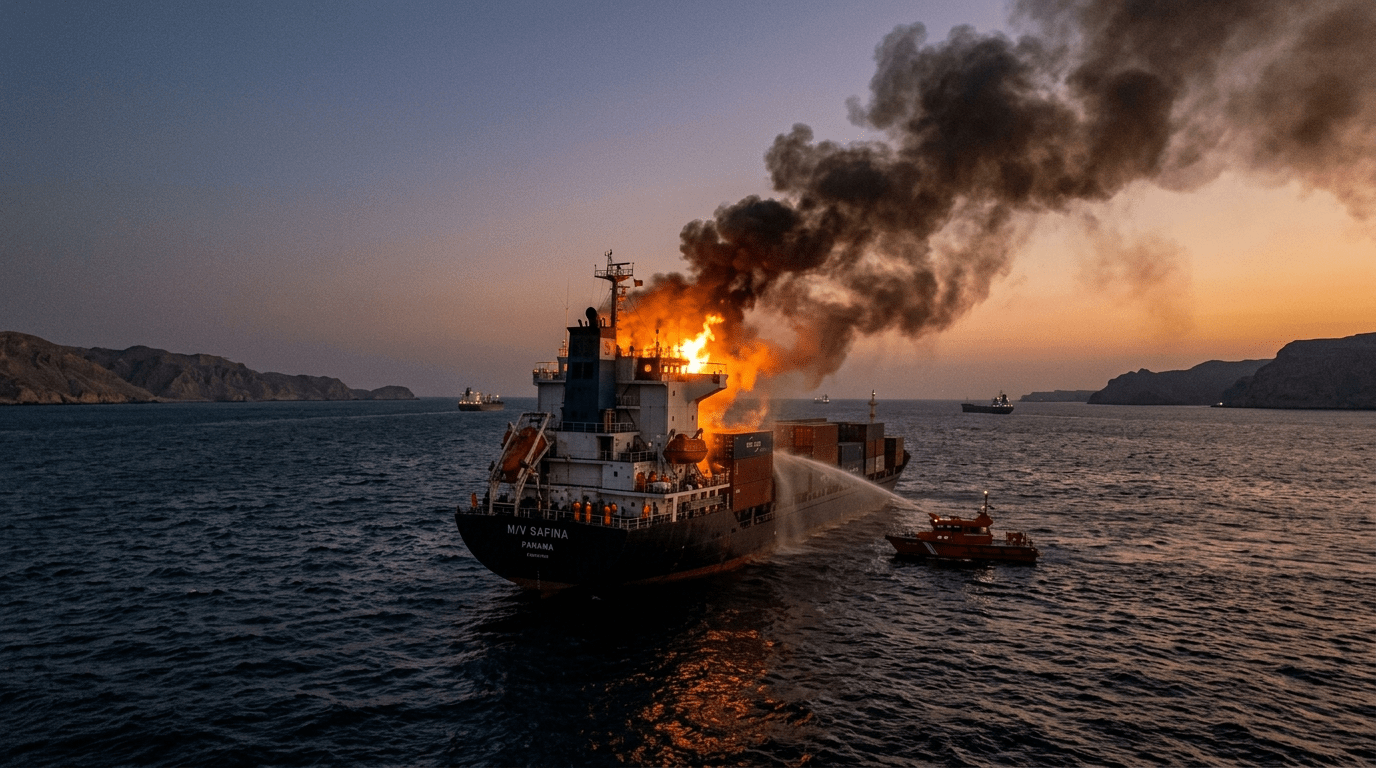
Trump Points Finger at Iran Over Korean Cargo Ship Explosion
The U.S. President accused Tehran of firing upon vessels including a South Korean freighter near the Hormuz Strait, urging Seoul to join Washington’s “Liberation Project” naval operation. Meanwhile, Korean officials are taking a more cautious approach, insisting on a thorough investigation before drawing conclusions.
Details of the Incident
On the evening of May 3rd, the medium-sized bulk carrier NAMU experienced an explosion followed by fire while anchored in the Hormuz Strait. The blast originated near the port side of the engine room around 8:40 PM. Crew members responded quickly, using carbon dioxide suppression systems to battle the flames for approximately four hours before bringing the situation under control.
All 24 crew members aboard, including six Korean nationals, were confirmed safe with no casualties reported. The vessel is currently being prepared for towing to Dubai port, where detailed damage assessments and accident investigation procedures will begin.
Diplomatic Tensions Rising
Through his social media platform, the American leader directly named Iran as responsible for multiple attacks on ships from uninvolved nations, specifically mentioning the Korean cargo vessel. He called on South Korea to participate in the maritime security operation designed to help foreign vessels exit the region amid Middle East conflict spillover.
Seoul’s response has been measured. A presidential spokesperson emphasized that Korea maintains close communication and intelligence sharing with Washington, Tehran, and Gulf Cooperation Council member states including Saudi Arabia, UAE, Kuwait, Qatar, Bahrain, and Oman. The government stressed that determining the exact cause requires completing the towing process and conducting proper forensic analysis.
Strategic Considerations
Observers note that Seoul’s cautious stance reflects awareness of potential diplomatic fallout. If Iranian involvement is confirmed, Korea’s balanced approach toward both Washington and Tehran would face serious challenges, while pressure to deploy forces to the Hormuz region would intensify significantly.
The presidential office convened an emergency meeting led by the chief of staff to coordinate response measures. Plans were announced to dispatch maritime safety investigators and fire forensics experts to the site, working independently alongside the shipping company’s internal inquiry team. Officials estimate the investigation will require several additional days.
Regional Security Situation
Following the incident, Korean authorities ordered all national vessels in nearby waters to relocate to safer zones. Ships previously anchored off the UAE coast have been redirected toward Qatari waters, effectively moving deeper into the Persian Gulf area.
Currently, 26 Korean-flagged vessels remain in the Hormuz Strait region, with approximately 160 Korean mariners aboard these ships, including those serving on foreign-registered vessels. The timing of the explosion coincides with the launch of the American-led evacuation support operation in the waterway.