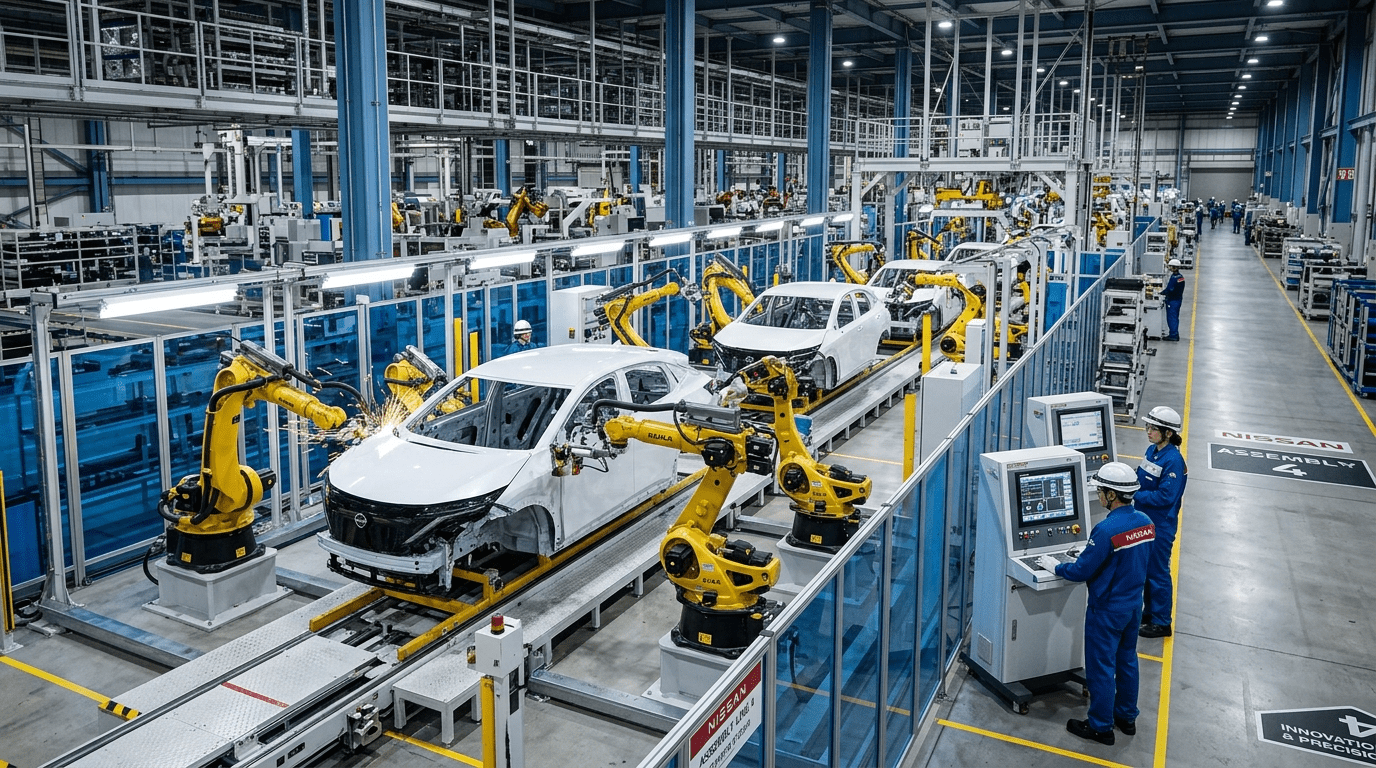
Nissan has announced a reduction in its projected net loss for the fiscal year despite experiencing declining global sales figures. The Japanese automaker attributes this improvement to relaxed emissions regulations in the United States, aggressive cost-cutting measures, and favorable currency exchange rates.
For the fiscal year ending in March, the company revised its estimated net loss downward from 650 billion yen to 550 billion yen. The reduction reflects benefits from reversing environmental compliance reserves following eased U.S. emissions standards, along with expanded cost reductions and positive foreign exchange impacts.
This development marks a positive signal for the automaker, which has been struggling with weak sales and restructuring expenses. To address these challenges, Nissan has implemented comprehensive measures including:
- Selling its headquarters building
- Reducing workforce numbers
- Consolidating production facilities
- Cutting global manufacturing capacity
The company’s CEO indicated earlier this year that restructuring-related non-cash costs would impact net earnings. Additionally, Nissan announced plans to streamline its product lineup from 56 models down to 45, discontinuing underperforming vehicles.
In January, the automaker reached an agreement to sell its South African manufacturing plant to Chinese automaker Chery. This dual strategy of reducing production systems and product offerings aims to concentrate efforts on profitability recovery.
Currency fluctuations have also played a significant role in the improved outlook. A weaker yen enhances the competitive pricing of Japanese-manufactured vehicles in international markets and increases the value of overseas earnings when converted back to yen.
However, sales challenges persist. Global vehicle sales dropped 4.2% year-over-year to 3.2 million units for the fiscal year ending in March.
Despite ongoing sales declines, the reduced loss projection stems from a combination of one-time factors and effective cost management. Notably, the company revised its operating profit forecast from a 60 billion yen loss to a 500 billion yen profit. While the net loss remains substantial, achieving operating profitability demonstrates the effectiveness of cost-reduction initiatives.
Market observers believe the critical question is whether Nissan can simultaneously achieve restructuring goals and restore product competitiveness. The company is pursuing external partnerships, recently collaborating with Uber Technologies and UK-based autonomous driving startup Wayve to provide robotaxi services, with a pilot program scheduled to launch in Tokyo by late 2026.