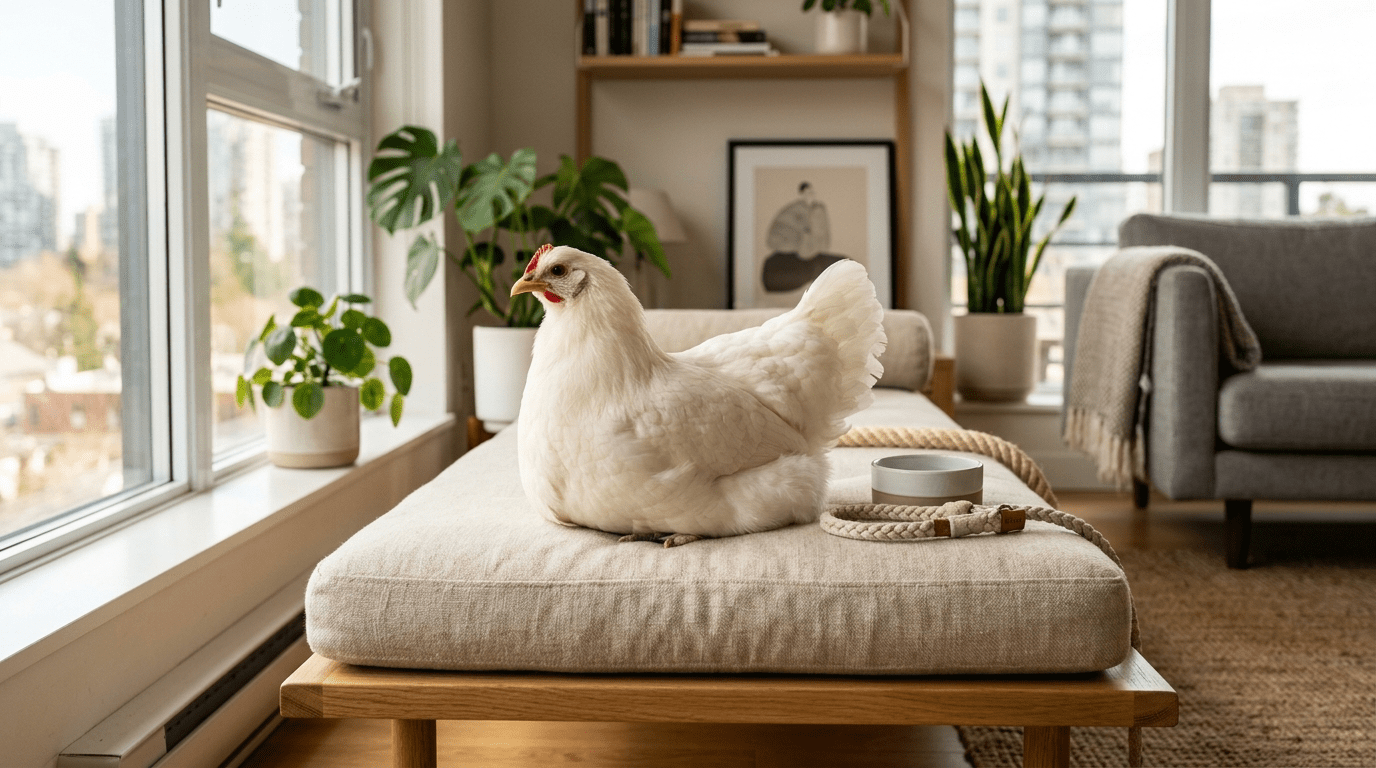
A Growing Trend: Chickens as Household Companions
In a surprising shift, birds traditionally raised for meat are now finding their way into urban homes as beloved companions. Social media posts featuring these feathered friends have generated over 3 billion views, signaling a major change in how city dwellers think about pets.
Low-Cost, Low-Maintenance Living
One owner hatched three chicks from eggs given by a relative. These birds belong to a rare breed known for white feathers and elegant appearance—sometimes nicknamed “phoenix fairies.” The monthly feeding cost? Less than the equivalent of $6.
According to the owner, these birds are gentle, compact, and easy to care for. Veterinarians have confirmed that keeping one or two birds as pets poses minimal disease risk, unlike larger farm operations where avian illnesses can spread.
Treating Chickens Like Dogs and Cats
Pet chicken owners are going all out: custom leashes, diapers, even strollers for neighborhood walks. Many sleep alongside their birds and claim they don’t shed fur or produce strong odors like traditional pets.
One enthusiast from the eastern region keeps a rooster with a distinctive crest, giving it the nickname “slanted bangs.” This owner insists the bird is intelligent enough to understand human speech and make eye contact after spending time together.
Why Choose Chickens Over Cats or Dogs?
Cost savings: No expensive vet bills or premium food
Sleep-friendly: Chickens rest quietly at night and wake naturally at dawn
Predictable behavior: Calmer routines compared to more energetic mammals
Part of a Larger Exotic Pet Movement
This chicken trend fits into a broader pattern: reptiles, insects, rodents, and other unusual animals are increasingly popular in urban households. Industry estimates suggest around 17 million people now keep non-traditional pets, with the market valued at roughly $3 billion.
The shift reflects changing lifestyles and economic considerations, as younger generations seek affordable, space-efficient companions that fit apartment living.