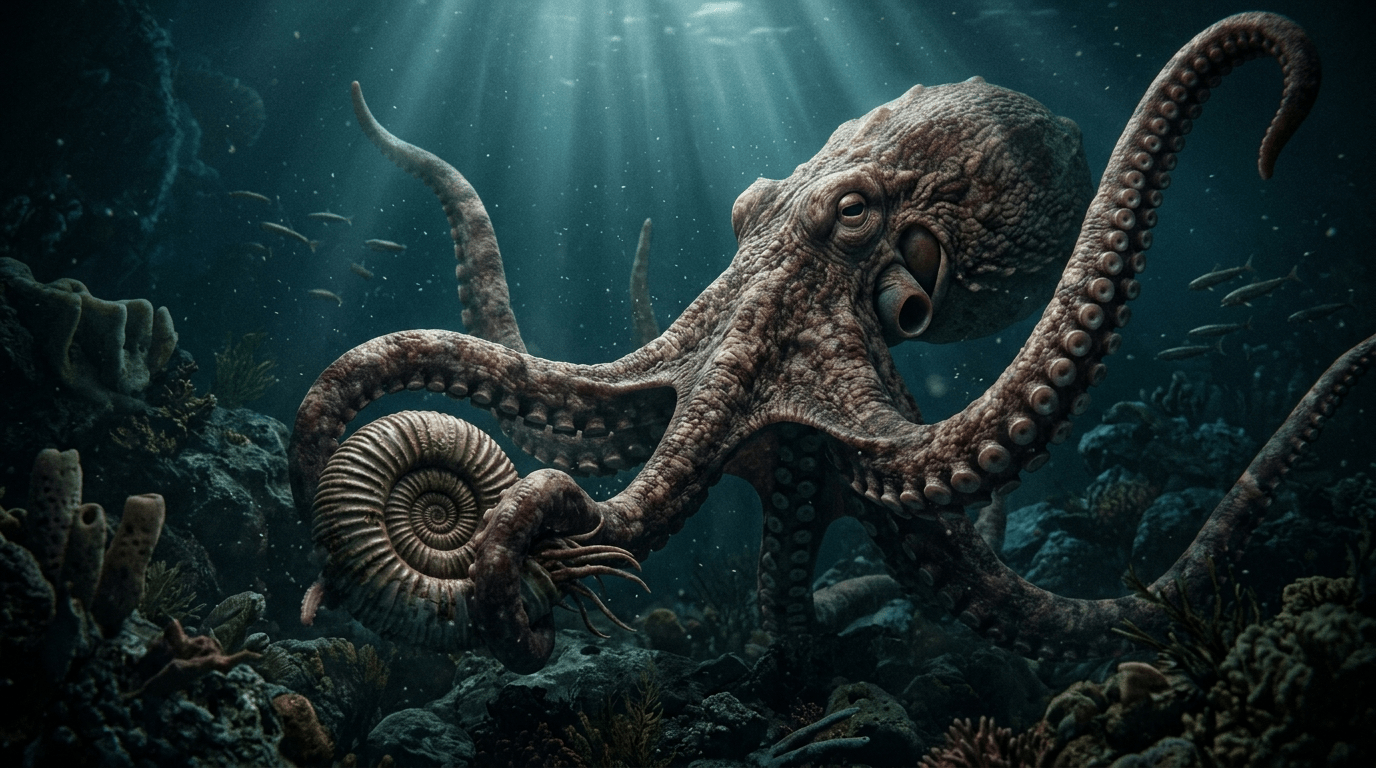
Extraordinary Discovery Reveals Ancient Ocean Giants
Scientists examining ancient rock formations in Hokkaido have uncovered evidence suggesting that enormous octopuses once ruled the prehistoric seas. These creatures may have reached staggering lengths of up to 62 feet (19 meters), potentially making them the largest invertebrates ever to exist.
The findings challenge our understanding of marine ecosystems during the Late Cretaceous period, approximately 100 to 72 million years ago. For comparison, today’s giant squid—currently considered the biggest invertebrate—typically measures only around 40 feet in length.
Advanced Technology Unlocks Ancient Secrets
The research team from a Japanese university analyzed fossilized jaw structures—specifically the beak-like parts that octopuses use to crush prey. Because octopuses lack bones, they rarely leave behind fossils, making this discovery particularly valuable for understanding their prehistoric relatives.
Researchers employed cutting-edge methods to study the specimens. They carefully sliced ancient rocks into extremely thin sections (just 0.05 millimeters thick), photographed each layer, and then digitally reconstructed three-dimensional models of the fossils. Artificial intelligence helped analyze wear patterns and cracks on the jaw structures.
After examining 27 fossil specimens collected from various locations in Japan and internationally, scientists found jaw fossils measuring up to 10 centimeters—remarkably large compared to modern octopus beaks, which typically measure only a few centimeters.
Apex Predators of the Ancient Seas
The fossils revealed clear evidence that these colossal cephalopods hunted hard-shelled creatures like ammonites. Bite marks and crushing damage on the fossilized jaws suggest they had powerful beaks capable of breaking through tough protective shells.
By comparing the fossil jaw sizes with those of living octopus species, the research team estimated that Cretaceous octopuses grew to lengths between 23 and 62 feet (7 to 19 meters).
Until now, scientists believed that Mosasaurus—a massive marine reptile stretching approximately 56 feet (17 meters)—dominated the food chain in Cretaceous oceans. However, this new evidence suggests that giant octopuses may have shared the role of top predator during that era.
The study demonstrates that invertebrates could achieve sizes large enough to compete as apex predators in ancient marine environments. Questions remain about how these enormous octopuses interacted with other top predators like Mosasaurus—whether they competed for resources or occupied different ecological niches.
The research findings have been published in a major scientific journal, opening new discussions about the complexity and diversity of prehistoric ocean life.